Designing Trust in Pet Sitting Services
Leaving a pet with someone else is an emotionally high-stakes decision. Pet owners often struggle to find sitters they can genuinely trust, especially within their local area.
Duration
3 Months
Role
User Research, Visual Designing

The Problem
Pet owners often experience anxiety when leaving their pets in someone else’s care. While pet sitting services exist, many fail to address the emotional weight of the decision. Owners are not just looking for availability they are looking for trust, reassurance, and confidence that their pets will be cared for as they would care for them themselves.
Common pain points include:
Difficulty identifying reliable and trustworthy sitters
Limited transparency into a sitter’s experience or intentions
A lack of communication once the pet is handed over
These gaps create hesitation and stress, leading many pet owners to rely on informal arrangements or avoid pet sitting services altogether.
1
Research
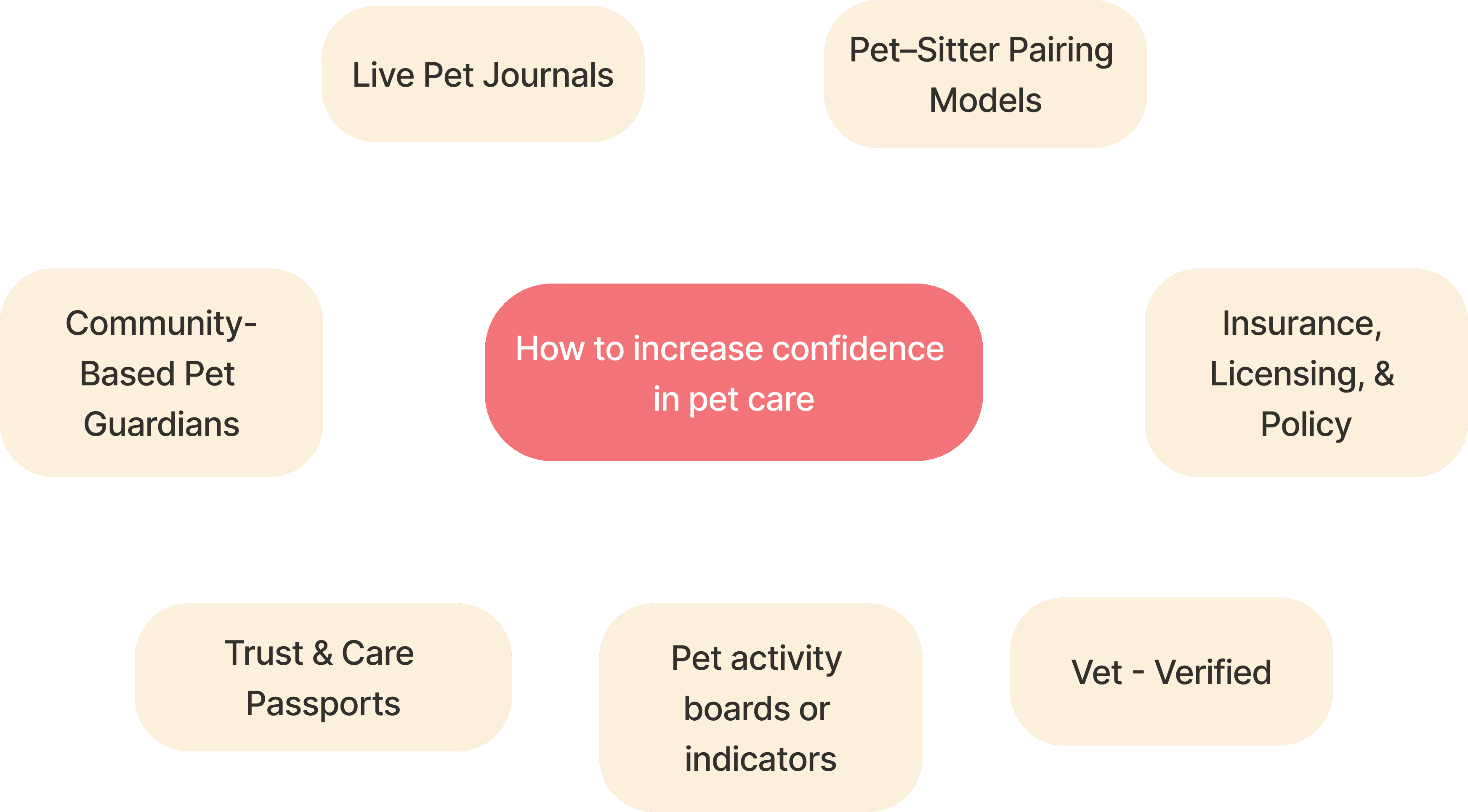
Our research aimed to understand not only how pet owners find pet sitters, but how they feel throughout the process. Early assumptions framed the problem as a marketplace challenge matching owners with sitters quickly and efficiently. However, initial conversations suggested that pet care is deeply emotional, and that anxiety, trust, and reassurance play a far greater role than speed or cost. This led us to focus on both functional needs (reliability, communication, logistics) and emotional needs (peace of mind, safety, confidence).
User interviews
We conducted semi-structured interviews with pet owners who had previously used pet-sitting services or relied on friends, family, or neighbours. Interviews focused on:
How pet owners currently discover and evaluate pet sitters
What signals make a sitter feel trustworthy or unsafe
Moments of stress before, during, and after leaving their pet
Past negative experiences and how those shaped future behaviour
A strong, consistent pattern emerged: trust needed to be established early and reinforced continuously. Pet owners expressed that even small gaps—delayed responses, unclear updates, or lack of transparency significantly increased anxiety. Many participants shared that they would rather pay more or wait longer if it meant feeling confident their pet was safe and cared for.
These interviews revealed that the emotional burden of leaving a pet often outweighed the logistical challenge of finding a sitter.
Personas
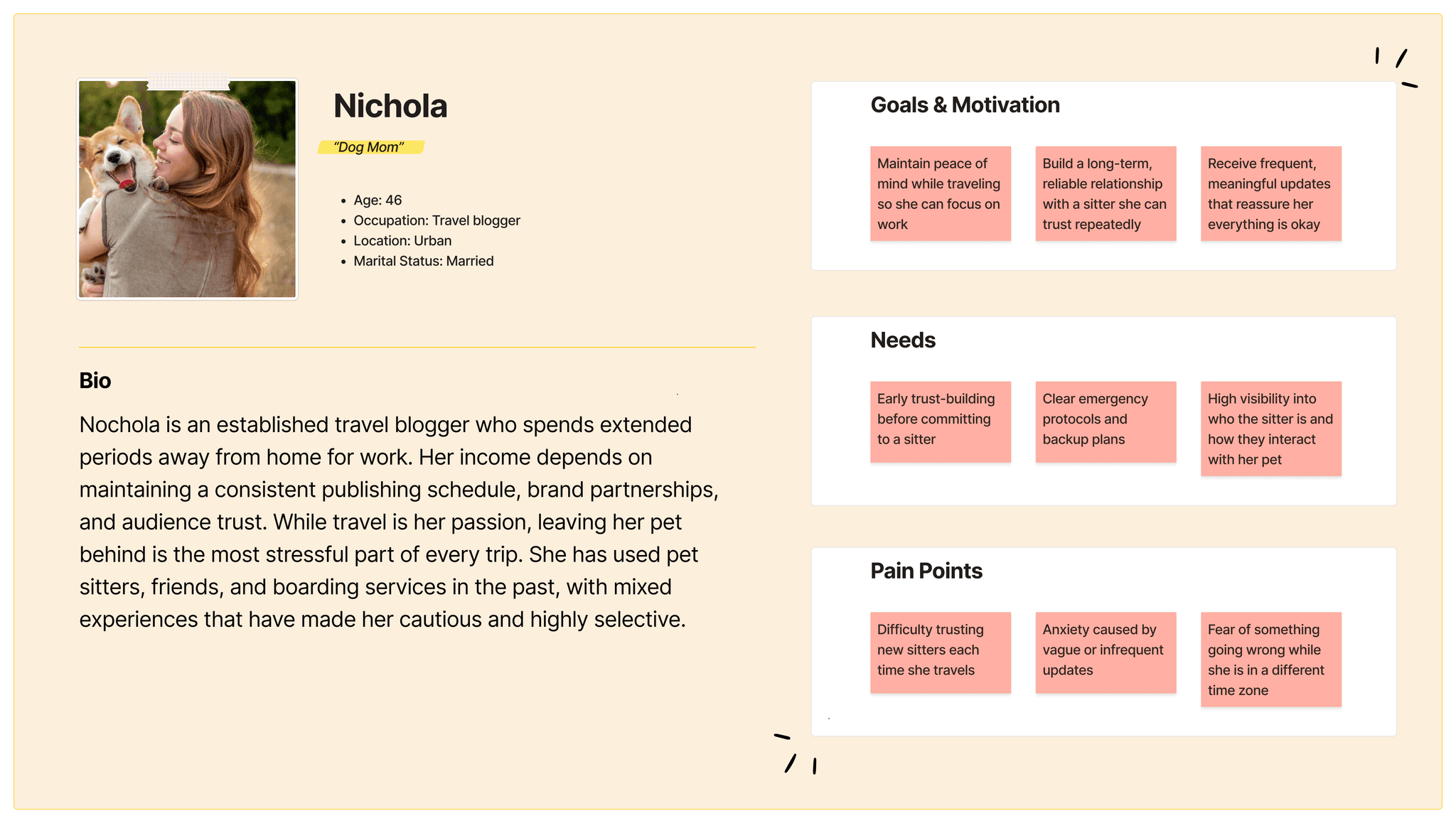
Using these insights, we developed personas centered around cautious, emotionally invested pet owners rather than efficiency-driven users. These personas reflected users who:
Treat pets as family members
Are highly risk-averse when it comes to care
Seek emotional reassurance alongside functional reliability
The personas helped anchor design decisions in real user concerns, ensuring we didn’t optimize for speed or scale at the expense of trust and emotional comfort.
2
Design
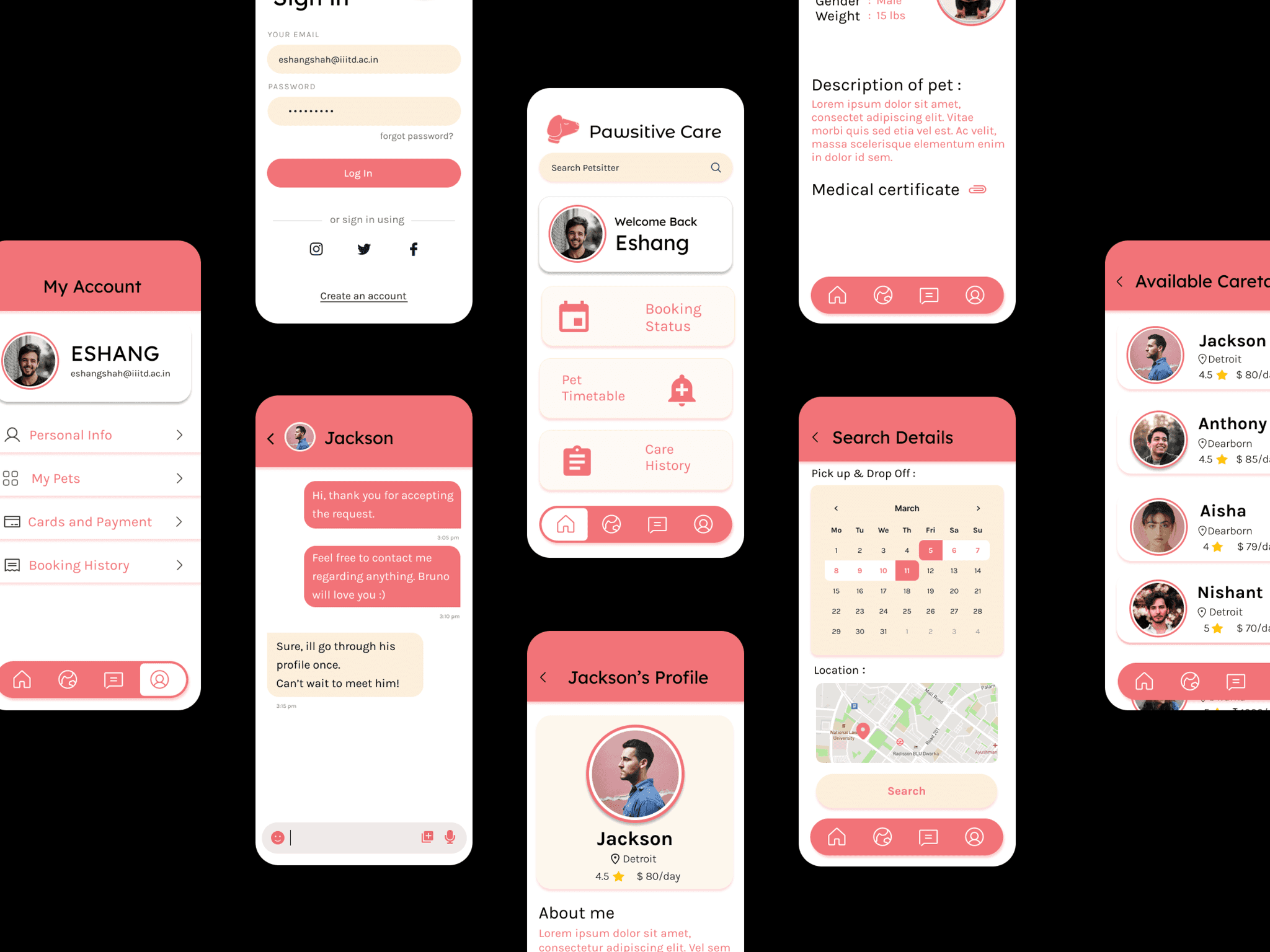
The outcome of the research was Pawsitive Care, a community-based pet sitting platform designed to make trust visible and continuous.
Key design decisions focused on:
Highlighting sitter credibility through clear identity and profiles
Encouraging communication through updates and check-ins
Reducing cognitive and emotional load with a calm, simple interface
Rather than overwhelming users with features, the design prioritizes moments that matter emotionally — before booking, during care, and after pickup.
Brand & visual system
The visual identity was designed alongside the product to reinforce trust at every touchpoint.
I explored multiple logo and identity directions, intentionally rejecting concepts that felt:
Too generic
Overly playful or unserious
Difficult to scale across platforms
The final visual system balances warmth and professionalism through:
Soft, reassuring colours
Friendly yet structured iconography
A brand tone that communicates care without feeling childish
3