Designing Trust into the Post-Ballot Silence
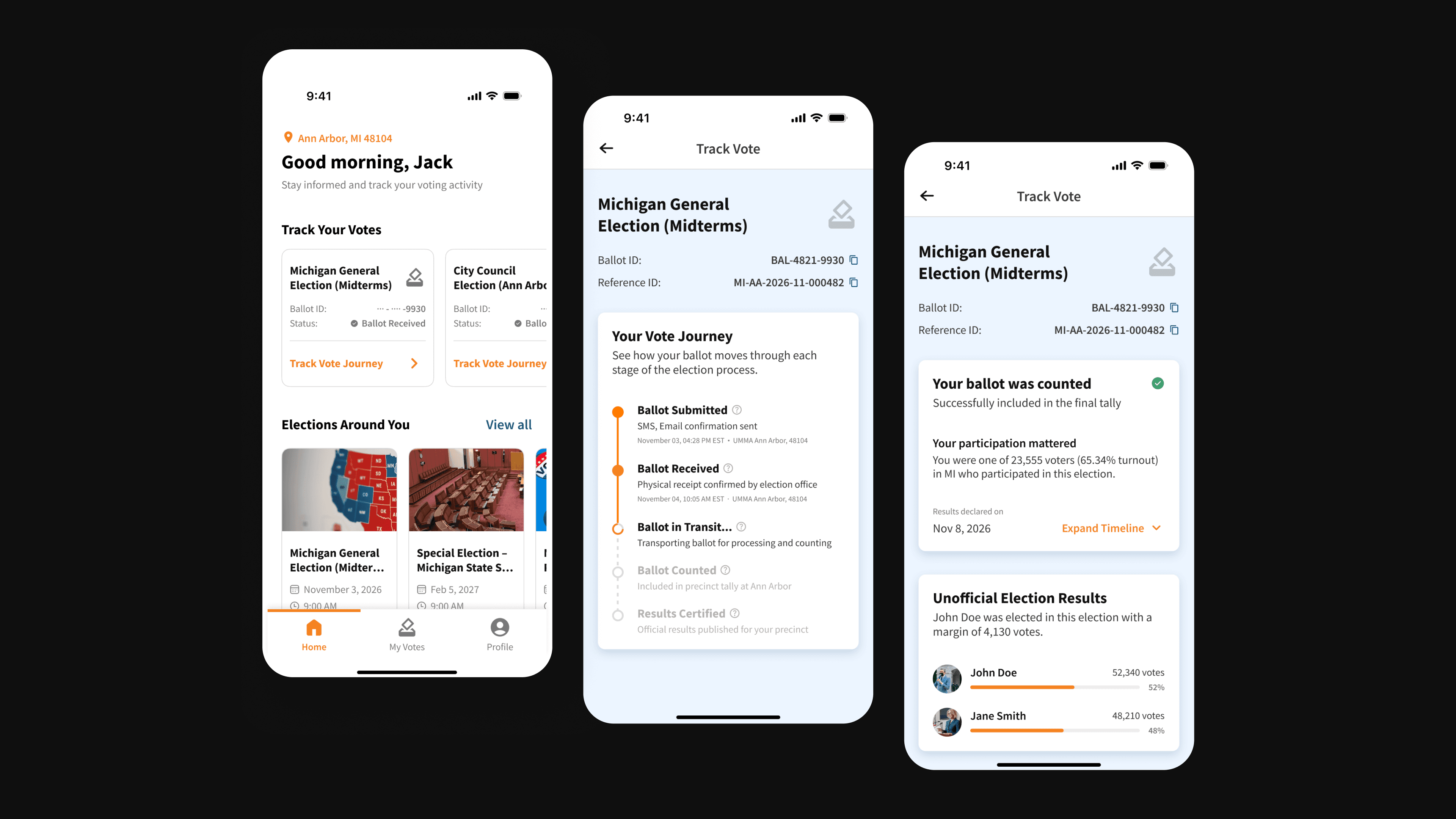
I led design on a framework that closes the information gap voters fall into after casting a ballot turning the silence between "I voted" and "here are the results" into a visible, trustworthy journey.
Capstone Project
University of Michigan
Role
UX Research & Design

Background
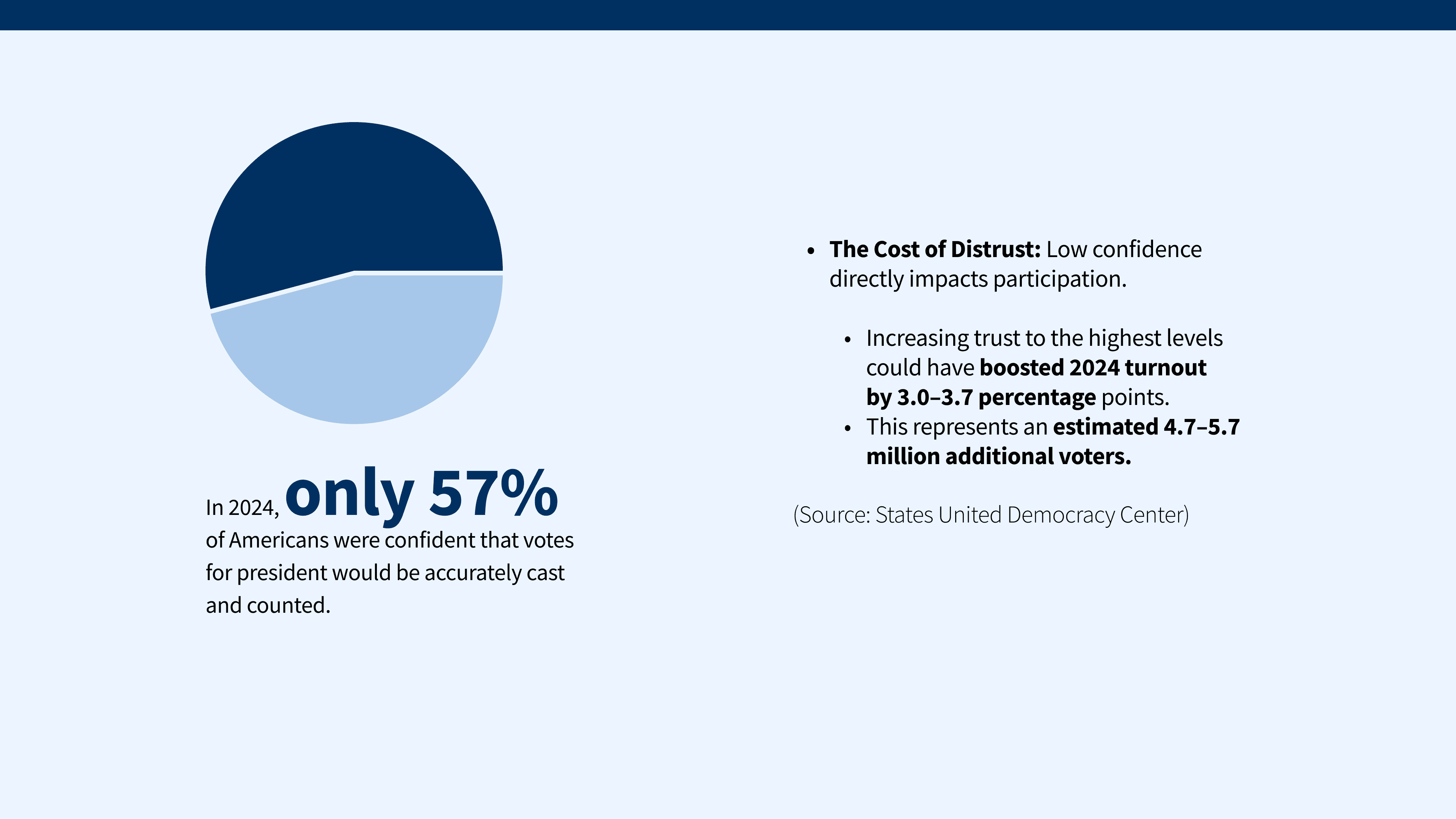
After a voter submits their ballot, they enter an information vacuum no confirmation, no updates, no visibility into what happens next. Doubt doesn't begin because something goes wrong; it begins because nothing is communicated. In 2024, only 57% of Americans were confident their presidential votes would be accurately cast and counted, and that erosion of trust has a measurable cost: it suppresses participation.
We set out to understand this gap from both sides voters and the officials who run elections and to design a framework that rebuilds confidence using infrastructure that already existsChallenges with the old website.
What we heard
We grounded the work in primary research: 8 interviews with voters, 2 interviews with election officials, and a review of 25+ articles, paired with a competitive analysis and literature review.
The voter side anxiety in the silence:
The drop-off moment: Voters described confidence dipping the instant they submitted their ballot, with no signal that anything had been received.
The information vacuum: To fill the gap, voters turn to news and social media channels that tend to amplify anxiety rather than resolve it.
Language barriers: Non-English speakers face a second layer of uncertainty, since translated resources often feel like afterthoughts rather than native experiences and are hard to find.
The official side the safety of silence:
Infrastructure vs. implementation: The tools to communicate already exist, but jurisdictions hesitate to use them.
Communication as a liability: Officials worry new touchpoints will be misinterpreted, weaponized politically, or create more confusion.
The status quo feels safer: Staying silent feels lower-risk to officials even as they acknowledge it quietly erodes public trust.

The reframe: a problem already solved elsewhere
E-commerce cracked the same trust problem years ago. When you order a package, you get an instant confirmation, a tracking number, live updates at every hub, and proof of delivery. Voters never got that blueprint. The framework reapplies it to the ballot journey received, verified, counted, certified making each milestone visible without ever exposing how someone voted.

Design Principles
The framework rests on four principles that guided every decision:
Trust: make the invisible visible. Surface key ballot milestones as a simple, real-time timeline through familiar channels, and default to disclosure, especially during delays when silence erodes trust fastest.
Transparent: separate identity from intent. Let voters confirm their ballot was counted without revealing how they voted. Be specific, not reassuring: "counted at your precinct on Nov 3" beats a generic "your vote was counted" because specificity converts skepticism into confidence.
Access: meet voters where they are. Use SMS, email, and physical mail — channels voters already trust — and speak every voter's language. The benchmark is genuine reach, not legal compliance.
Security: make trust cumulative, not transactional. Treat each election as one data point in a long-term relationship. Consistency of format, tone, and cadence across cycles builds institutional credibility over time.

From Principles to Action
The first move requires no new infrastructure. Election offices already hold voter contact information collected at registration it simply isn't used after a ballot is cast.
Mail, SMS, and Email deliver milestone updates and official confirmations through channels offices can already operate.
A dedicated mobile app extends the vision further a persistent ballot timeline, election reminders, and a centralised voter hub framed honestly as a bigger ask with a different set of requirements.